Kumamoto: Kyushu’s Semiconductor Base Where Industrial Precision Meets Samurai Legacy
The Strategic Hub in Central Kyushu At the heart of the Kyushu region, Kumamoto Prefecture operates as a rising industrial node with national significance. Its capital, Kumamoto, balances modern manufacturing with deep historical identity—positioning the region as
The Strategic Hub in Central Kyushu
At the heart of the Kyushu region, Kumamoto Prefecture operates as a rising industrial node with national significance.
Its capital, Kumamoto, balances modern manufacturing with deep historical identity—positioning the region as both production base and cultural destination.
For businesses, Kumamoto offers a targeted proposition: advanced industry supported by stable infrastructure and strong regional identity.
Trade: Semiconductors as Growth Engine
Kumamoto has emerged as one of Japan’s key semiconductor hubs.
Global investment—led by players such as TSMC—has accelerated the region’s transformation into a high-tech manufacturing center.
The ecosystem includes:
Semiconductor fabrication and assembly
Precision component manufacturing
Supply chain networks supporting chip production
What defines Kumamoto’s advantage:
Strategic alignment with Japan’s semiconductor revitalization policy
Availability of land and infrastructure for large-scale facilities
Strong government support and incentives
For international operators, Kumamoto offers:
Entry into Japan’s semiconductor supply chain
Opportunities in materials, equipment, and logistics
A high-growth industrial environment with global relevance
This is not legacy manufacturing—it’s future-critical production.
Tourism: Castle as Cultural Anchor
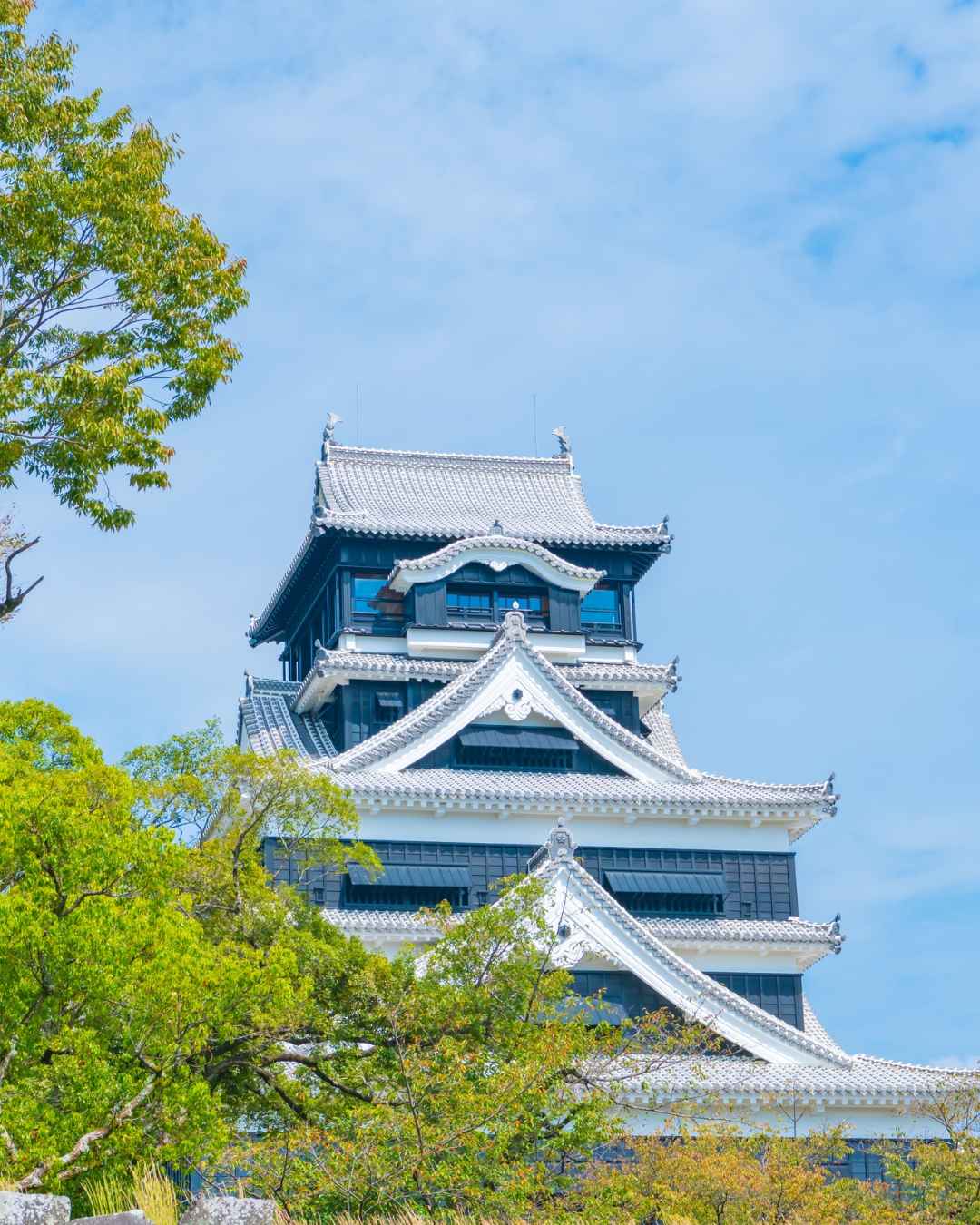
Kumamoto’s tourism economy is centered on Kumamoto Castle—one of Japan’s most iconic and historically significant fortresses.
Despite damage from the 2016 earthquake, restoration efforts have reinforced its role as both symbol and destination.
What drives tourism here:
Strong domestic recognition and cultural value
Continuous visitor interest tied to reconstruction progress
Integration with local food, retail, and city tourism
For tourism businesses, Kumamoto offers:
A stable anchor attraction with long-term appeal
Opportunities in guided experiences, hospitality, and retail
A narrative of resilience that enhances visitor engagement
This is heritage tourism—with renewed relevance.
Culture: Samurai Legacy as Regional Identity
Kumamoto’s cultural framework is deeply tied to its samurai past.
The region was historically governed by powerful feudal lords, and its legacy remains visible in architecture, traditions, and local identity.
Key characteristics include:
Strong emphasis on discipline, loyalty, and resilience
Cultural storytelling tied to castle history and regional figures
Integration of samurai heritage into tourism and branding
For businesses, this creates:
Authentic narratives for cultural tourism and products
Opportunities to align brands with heritage and strength
A foundation for experience-based offerings
In Kumamoto, history is not static—it informs the present.
Infrastructure: Built for Industry and Access
Kumamoto’s infrastructure supports both manufacturing and mobility.
The Kyushu Shinkansen connects the region to Fukuoka and Kagoshima, while Kumamoto Airport facilitates domestic and international travel.
Industrial zones around the prefecture provide:
Space for large-scale semiconductor facilities
Efficient logistics for materials and distribution
Integration with broader Kyushu supply chains
Kumamoto is positioned for growth—physically and economically.
Why Kumamoto Matters Now
As global demand for semiconductors increases, Kumamoto’s relevance rises.
It offers:
A rapidly expanding semiconductor ecosystem
A strong cultural tourism anchor in Kumamoto Castle
A regional identity built on resilience and history
Yet it remains less saturated than major industrial centers.
That gap is opportunity.
Market Entry Angles: Where to Engage
1. Semiconductor & Advanced Manufacturing
Enter supply chains supporting chip production—materials, equipment, and logistics.
2. Industrial Infrastructure & Services
Develop facilities and services that support incoming global manufacturers.
3. Cultural Tourism & Hospitality
Build experiences around Kumamoto Castle and samurai heritage.
Kumamoto rewards alignment. The closer the business fits its industrial trajectory, the stronger the outcome.
Kumamoto doesn’t rely on legacy alone. It builds forward.
In a market increasingly defined by technology and supply chains, Kumamoto is positioning itself at the core—while maintaining a cultural identity that adds depth. For businesses looking to engage with Japan’s next industrial wave, this is where momentum is forming.