Nagasaki: Japan’s Historic Gateway Where Trade Legacy Fuels Hybrid Tourism and Fusion Culture
The Port That Opened Japan to the World On the western edge of Kyushu region, Nagasaki Prefecture operates as Japan’s original international interface. Its capital, Nagasaki, was one of the few ports open to foreign trade during
The Port That Opened Japan to the World
On the western edge of Kyushu region, Nagasaki Prefecture operates as Japan’s original international interface.
Its capital, Nagasaki, was one of the few ports open to foreign trade during Japan’s isolation period—creating a legacy of exchange that still defines its economy.
For businesses, Nagasaki offers a clear narrative: global connection rooted in history.
Trade: Legacy of International Exchange
Nagasaki’s economic identity is built on centuries of trade.
The artificial island of Dejima served as Japan’s controlled gateway to Dutch and Chinese merchants, establishing early systems of international commerce.
Today, that legacy translates into:
Maritime industries and port logistics
Shipbuilding and engineering traditions
International business awareness uncommon in regional markets
What defines Nagasaki’s trade advantage:
Historical alignment with global exchange
Established maritime infrastructure
Cultural familiarity with cross-border interaction
For international operators, Nagasaki offers:
A symbolic and strategic entry point into Japan’s trade narrative
Opportunities in maritime services and logistics
A region predisposed to international collaboration
This is not a new gateway—it’s Japan’s original one.
Tourism: Hybrid Model with Global Appeal
Nagasaki’s tourism economy is layered.
Sites like Glover Garden reflect foreign influence, while landmarks such as Nagasaki Peace Park anchor modern historical reflection.
The result is a hybrid tourism model:
Cultural tourism tied to international history
Peace tourism with global recognition
Urban and scenic attractions integrated into one itinerary
What differentiates Nagasaki:
Multiple narratives within a single destination
Strong international awareness
Emotional and educational engagement
For tourism businesses, Nagasaki offers:
Diverse visitor segments—from history to reflection to leisure
Opportunities in guided experiences, hospitality, and cultural programming
A market that values depth over volume
This is tourism with layered meaning.
Culture: Fusion as Identity
Nagasaki’s culture is defined by blending.
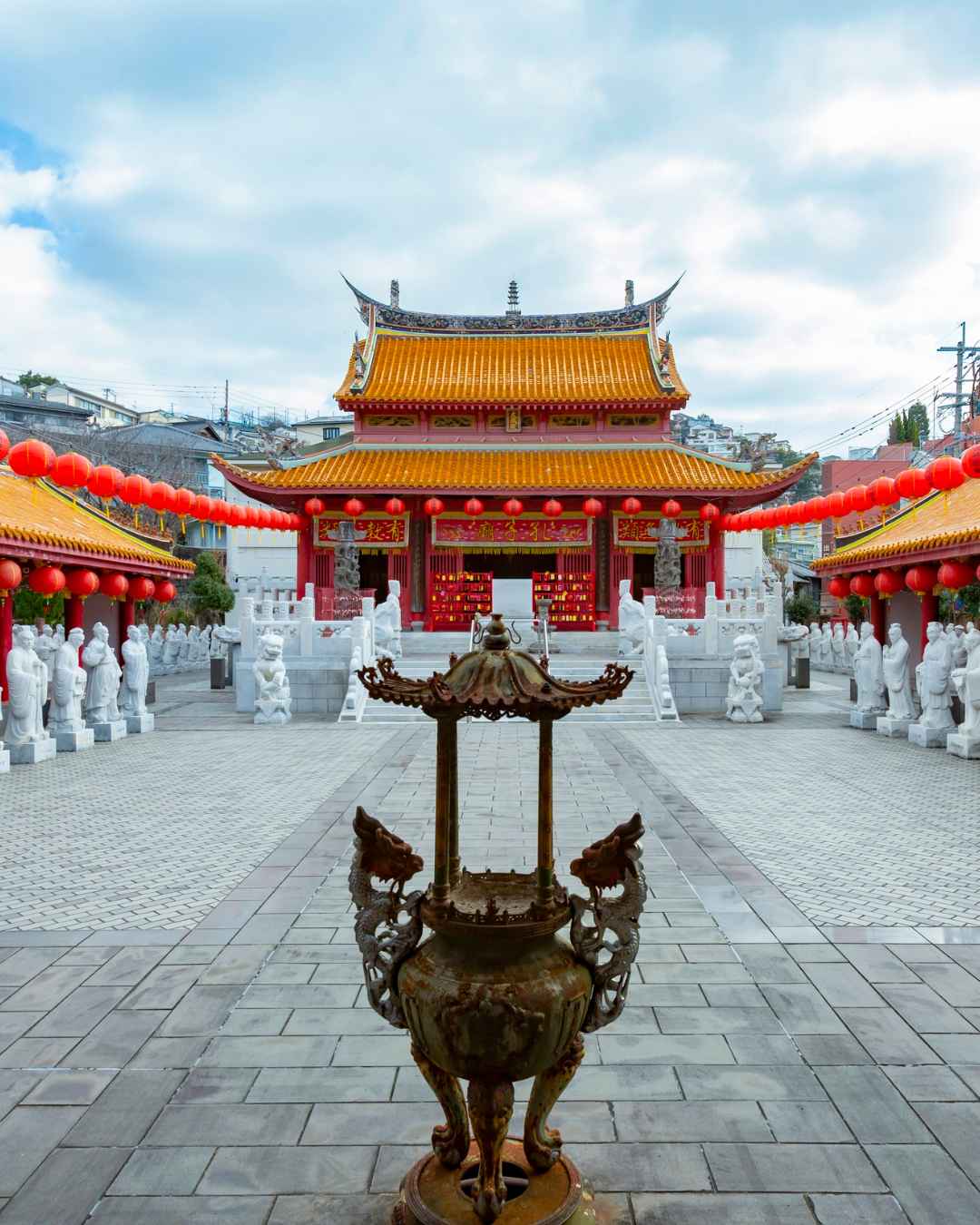
Centuries of interaction with foreign traders produced a unique cultural mix visible in:
Architecture combining Japanese and Western styles
Cuisine influenced by Chinese and European traditions
Festivals and traditions shaped by cross-cultural exchange
This creates a cultural environment that is:
Distinct within Japan
Easily understood by international audiences
Highly adaptable for modern branding
For businesses, this enables:
Cross-cultural product development
Story-driven branding rooted in authenticity
Market positioning that bridges Japan and the world
In Nagasaki, fusion is not a trend—it’s heritage.
Infrastructure: Coastal Access with Strategic Positioning
Nagasaki’s infrastructure supports its maritime role.
Ports connect the region to domestic and international routes, while Nagasaki Airport provides regional air access.
Rail connections, including the Nishi-Kyushu Shinkansen, improve accessibility to the broader Kyushu network.
The result:
Strong coastal logistics capabilities
Improved connectivity without overdevelopment
Strategic positioning for regional trade and tourism
Nagasaki remains outward-facing.
Why Nagasaki Matters Now
As global markets value authenticity, history, and cross-cultural narratives, Nagasaki’s positioning strengthens.
It offers:
A legacy of international trade
A diversified tourism model with global relevance
A unique fusion culture not found elsewhere in Japan
Yet it remains underleveraged compared to larger cities.
That gap is opportunity.
Market Entry Angles: Where to Engage
1. Maritime & Trade Services
Develop logistics, port services, and international trade operations.
2. Cultural & Hybrid Tourism
Create experiences that connect Nagasaki’s multiple historical narratives.
3. Cross-Cultural Branding
Build products and services that reflect Nagasaki’s fusion identity.
Nagasaki rewards perspective. The broader the view, the stronger the positioning.
Nagasaki doesn’t need to reinvent itself. It already connected Japan to the world.
In a global economy where cross-cultural understanding drives value, Nagasaki’s legacy becomes its advantage. For businesses looking to operate at the intersection of history and global exchange, this is where the foundation already exists.